
CHEMICAL ENGINEERING · UNIVERSITY OF LOUISVILLE
Engineering Materials. Controlling Chemistry.
We investigate how active sites, interfaces and molecular environments control chemical reactions and ion transport. Through materials design and non-thermal energy, we connect molecular understanding to pollutant treatment, resource conversion and energy storage.
WHAT WE WORK ON
Four fundamental research themes
REMEDIATE: Water Pollutant Removal and Transformation
TRANSFORM: Waste Polymers, Biomass and CO₂ to Chemicals
STORE: Electrolytes and Materials for Energy Storage
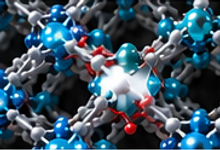


Defect & Active-Site Engineering
Tuning reactive sites to control activity and selectivity.
Interfaces & Molecular Environments
Controlling solvation, confinement and transport at interfaces.
Non-Thermal Energy & Bond Activation
Using plasma and light to access new reaction pathways.

Reaction Mechanisms & Molecular Understanding
Connecting molecular pathways to measurable performance.
Curious people, real problems
Led by Associate Professor Noppadon Sathitsuksanoh, our current team includes Napat (Mc) Lertthanaphol, Myat (Vicky) Thiri San, Preston Em, Thanayos Boonrit and Moses Onyango.

Napat (Mc)
Lertthanaphol
Myat (Vicky)
Thiri San
Preston Em
Latest News
2025 · Our sorbitol-to-sorbitan catalyst study was published in Chemical Engineering Journal.
2025 · We welcomed our FY25 NSF REU undergraduate researchers.
2023 · The team met Prof. George Smith, 2018 Nobel Laureate in Chemistry.
Thanayos Boonrit
Moses Onyango
Our alumni pursue careers in national laboratories, the chemical industry, and academia.
Recent publications
80+ peer-reviewed papers on catalysis, biomass, plastics and batteries. Here are a few of our latest.
2026 · Ambient alkaline pretreatment enables isoprenol fermentation from lignocellulosic biomass for sustainable aviation fuel production.
Energy & Fuels · 2026
2026 · Deep eutectic electrolytes for fast charging and wide temperature lithium metal batteries.
Journal of Power Sources · 2026
2026 · Mass transfer study on hydrogen evolution reaction of water electrolysis using metal structured electrodes.
International Journal of Hydrogen Energy · 2026
2025 · Selective conversion of aqueous sorbitol to sorbitan by amorphous silica-alumina catalysts.
Chemical Engineering Journal · 2025
From materials design to molecular understanding
Our facilities connect materials synthesis, reaction testing, chemical analysis and electrochemical measurements to understand how materials perform and why.
Create Materials
Synthesis and catalyst preparation.
Understand Reactions
Chemical analysis and materials characterization.
Measure Performance
Plasma, photochemical and electrochemical experiments.
JOIN US
There's a place for you in the lab
Bring your curiosity to materials, chemistry, and problems that matter.
LAB PHOTO TO ADD
PhD Students
Develop independent research in materials and chemistry.
Undergraduates
Build research skills through hands-on projects.
High School Researchers
Explore science through mentored lab experiences.
Visiting Scholars
Connect complementary expertise through collaboration.